

emotional regulation

When Things Feel Too Loud
Helping children understand overwhelm, sensory stress, and emotional regulation in a safe and visual way.
what is sensory overload?
Children can experience overwhelm when the world around them begins to feel too loud, too fast, too unpredictable, or emotionally difficult to process.
For some children, this may happen because of noise, busy environments, transitions, unexpected change, strong emotions, social pressure, or sensory experiences that their nervous system struggles to organise.
When overwhelm builds, the brain and body can move into a stress response. Some children may become emotional, angry, tearful, restless, or panicked, while others may shut down completely, withdraw, freeze, or struggle to communicate what they need.
These responses are not “bad behaviour”; they are often signs that a child no longer feels regulated, safe, or in control.
Emotional overwhelm can look different in every child. Some children are highly sensitive to sound, light, movement, clothing textures, or crowded spaces. Others may become overwhelmed by demands, social situations, transitions between activities, or difficulties understanding and expressing emotions.
Children with autism, ADHD, anxiety, sensory processing differences, or additional learning needs may experience these feelings more frequently, but overwhelm can affect any child.
Many children also struggle to explain what is happening internally while they are overwhelmed. Adults may only see the outward behaviour, rather than the stress building underneath it. This is why visual emotional regulation supports can be so powerful. They help children recognise feelings earlier, communicate their needs more clearly, and begin building safe, repeatable regulation strategies over time.
Understanding overwhelm is not about stopping emotions from happening. It is about helping children feel understood, supported, and gradually more confident in recognising what their body and emotions are trying to tell them.
signs a child may be overwhelmed
Overwhelm does not always look the same from one child to another. Some children become visibly emotional or distressed, while others become quiet, withdrawn, or appear to “switch off” completely.
Often, these behaviours are signs that a child’s nervous system is struggling to cope with the amount of sensory, emotional, or social information they are trying to process.
A child experiencing overwhelm may:
Cover their ears or become distressed by noise
Cry suddenly or become emotional very quickly
Become angry, frustrated, or reactive over small changes
Withdraw from conversation or social interaction
Refuse activities, schoolwork, or transitions
Freeze, shut down, or struggle to communicate
Pace, fidget, or appear physically restless
Seek constant reassurance from adults
Become clingy or unusually emotional
Avoid busy environments or crowded spaces
Struggle after school or social situations
Become exhausted after masking emotions throughout the day
Lash out physically or verbally when stress builds
Say they feel “too much,” “too full,” or “too tired”
Find it difficult to explain what is wrong
For many children, overwhelm builds gradually over time.
What looks like a sudden emotional reaction is often the result of stress that has been building underneath the surface for much longer. Busy classrooms, unexpected change, sensory discomfort, social pressure, emotional demands, or difficulties communicating needs can all contribute to this feeling.
Children with autism, ADHD, anxiety, sensory processing differences, or additional learning needs may experience overwhelm more frequently, but these experiences are not limited to diagnosis alone. Any child can struggle when their environment, emotions, or nervous system begin to feel too difficult to manage.
Recognising the signs of overwhelm early can help adults respond with support rather than punishment. When children are given safe ways to identify feelings, reduce stress, and communicate their needs, emotional regulation becomes far more achievable over time.

why visual emotional regulation supports help
When children are overwhelmed, it can become difficult for them to process language, explain emotions, or communicate what they need in the moment. Many adults instinctively respond with more talking, more instructions, or more questions, but during periods of stress, this can sometimes increase emotional overload rather than reduce it.
Visual emotional regulation supports help reduce this pressure by giving children simple, accessible ways to recognise feelings, understand body signals, and communicate needs without relying entirely on verbal explanation. Instead of trying to find the “right words” during moments of stress, children can begin identifying emotions and regulation strategies through visuals, colour, routine, and familiarity.
These types of supports are often particularly helpful for children with autism, ADHD, anxiety, sensory processing differences, speech and language difficulties, or additional learning needs, but they can benefit any child who struggles with emotional overwhelm or regulation.
At ThinkaLearn, our emotional regulation resources are designed to be calm, clear, and visually supportive without feeling overwhelming themselves. The goal is not to “stop” emotions from happening, but to help children gradually build emotional awareness, confidence, communication, and safe regulation strategies over time.
For many children, visual supports create a stronger sense of predictability and emotional safety. They help make emotions feel more understandable and less overwhelming. Over time, children can begin recognising patterns in how their body feels, what situations trigger stress, and which calming strategies help them feel more regulated again.
Visual supports can also encourage co-regulation between children and adults. Rather than focusing only on behaviour, they help shift attention toward understanding what a child may be experiencing internally. This creates more supportive conversations around emotional wellbeing and allows adults to respond with empathy, structure, and reassurance.
“when things feel too loud”
printable resource
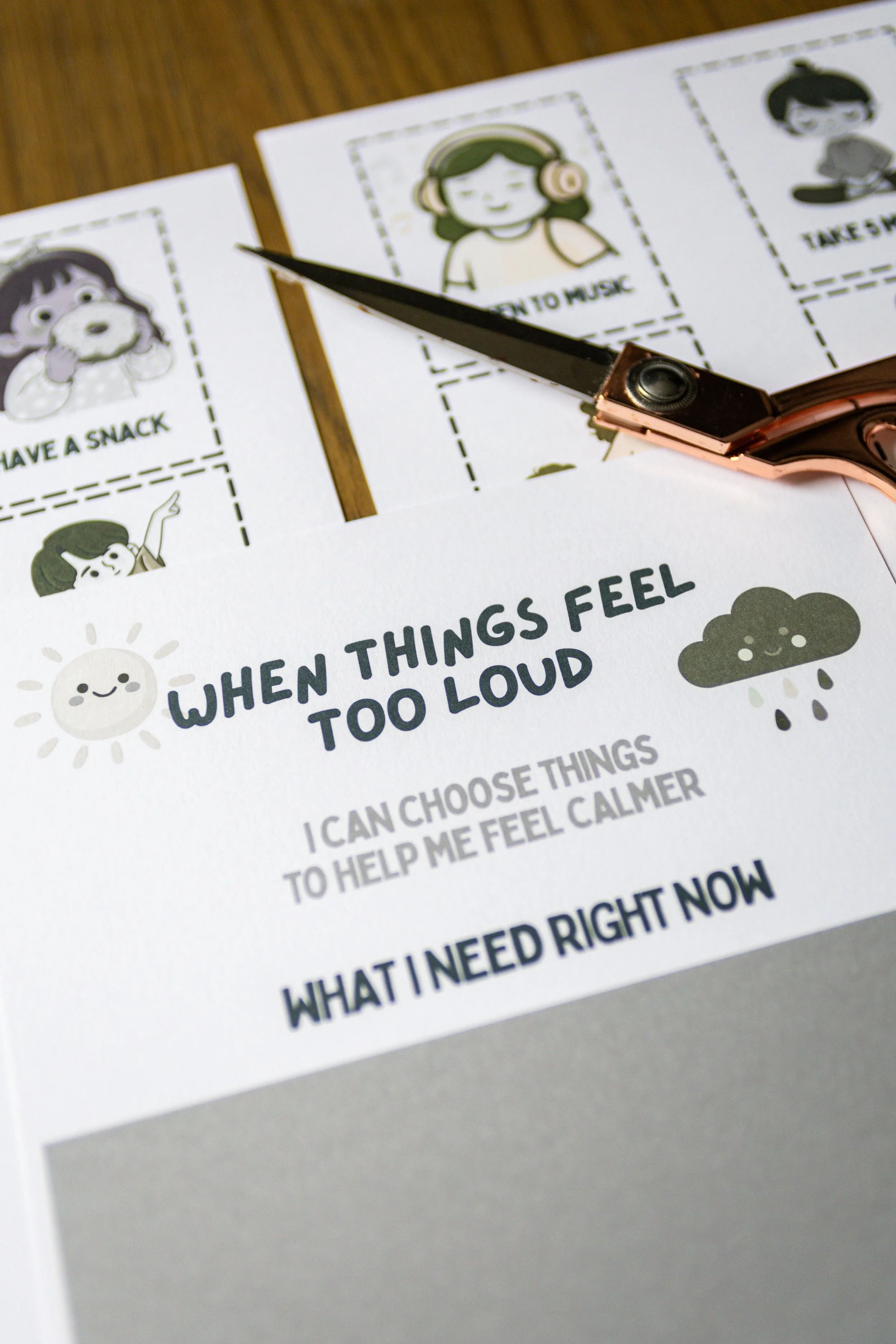
A gentle visual support resource designed to help children communicate their needs during moments of overwhelm, frustration, anxiety, sensory overload, or emotional dysregulation.
Children do not always have the words to explain when their thoughts, emotions, or surroundings begin to feel “too loud.” During these moments, communication can become difficult, and children may instead express distress through behaviour, withdrawal, frustration, shutdown, or emotional outbursts.
When Things Feel Too Loud was created to provide children with a calm, accessible, and emotionally safe way to show what they need; without pressure, shame, or overwhelming verbal demands.
Designed with emotional wellbeing, regulation, and neurodiversity-informed support in mind, this printable resource helps families create supportive moments of connection and understanding at home.
What’s Included
Visual Calm Support Board
A simple visual board designed to be displayed at home, such as on a fridge, wall, or calm corner area.
Children can use the board to:
communicate what they need
choose calming supports
identify helpful regulation strategies
reduce the pressure of verbal communication during difficult moments
The board has been intentionally designed using calm visuals, soft colours, and low-demand layouts to avoid sensory overload and encourage emotional safety.
Cut-Out Regulation & Support Cards
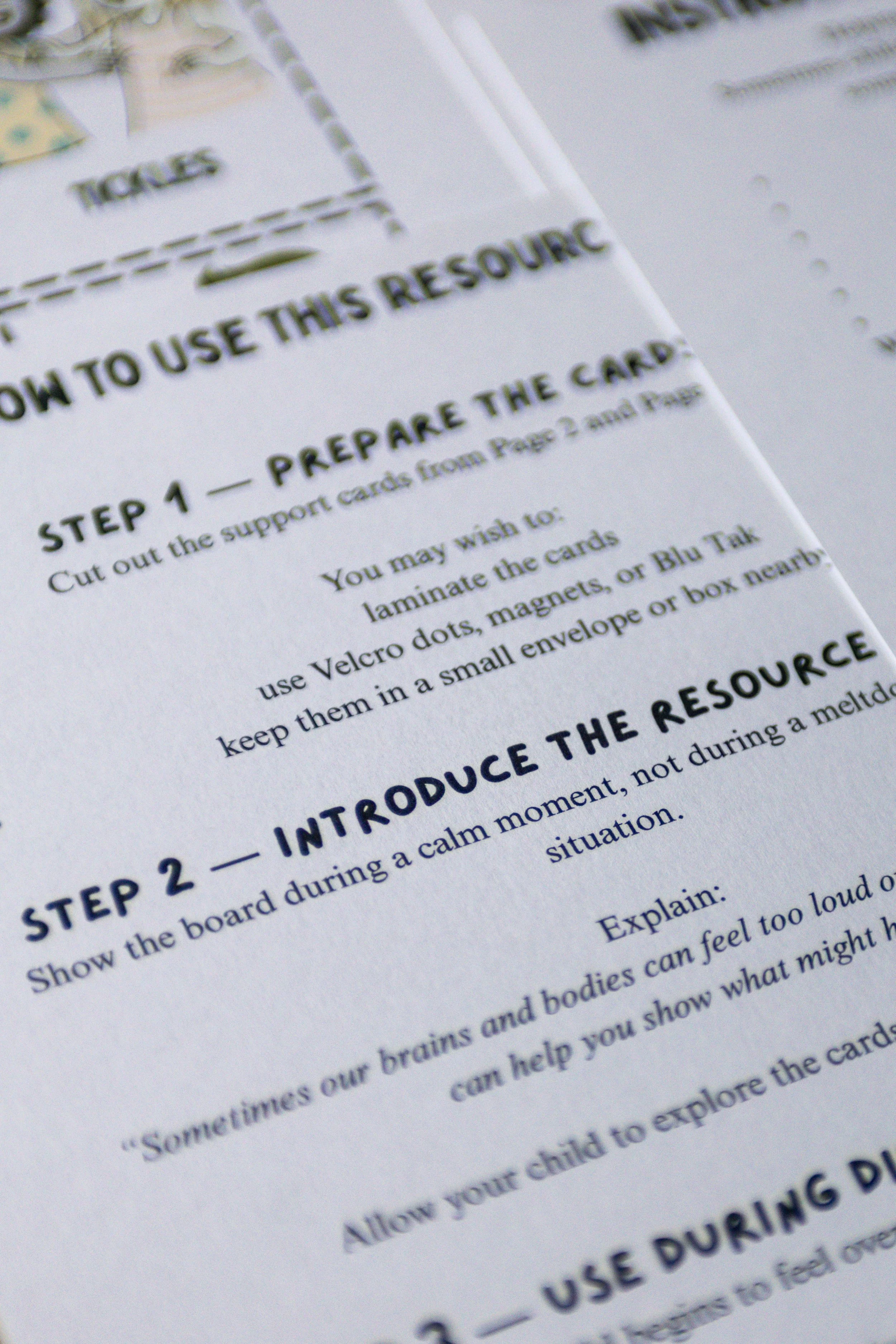
A collection of visual support cards that children can place onto the board to communicate their needs.
Cards include support options related to:
quiet and sensory breaks
movement and regulation
comfort and reassurance
communication needs
emotional overwhelm
space and connection
The cards can be:
cut out and laminated
attached using Velcro dots or magnets
stored for repeated use at home or in support settings
Parent & Caregiver Guidance Sheet
An easy-to-understand information page explaining:
why children experience overwhelm
how emotional regulation develops
how to use the resource supportively
links to emotional literacy and the Zones of Regulation® framework
practical co-regulation guidance for adults
The guidance focuses on understanding behaviour through a supportive and compassionate lens, helping adults respond with calm, connection, and predictability.
This resource is licensed to a single purchaser only. Parents may use the resource within their own household. Teachers may use the resource within a single classroom. Professionals may use the resource within their own practice. Redistribution, resale, sharing, uploading, or rebranding of ThinkaLearn resources is not permitted.
“When Things Feel Too Loud” is a visual emotional regulation resource designed to help children communicate what they need when their feelings, thoughts, sounds, worries, or surroundings begin to feel overwhelming.
The resource is built around a simple, child-friendly support board and a set of visual choice cards. Rather than asking a child to explain everything verbally during a difficult moment, the resource gives them a safer way to show what might help.
The resource includes:
“What I Need Right Now” Support Board
A calm visual board where children can place or point to the support they need in the moment. This helps children communicate needs clearly when talking may feel too difficult.
Visual Support Cards
A set of cut-out support cards showing simple regulation options such as taking a nap, having a snack, tickles, dances, bubbles, hugs, listening to music, taking five minutes, going for a walk, and squeezes.
Blank Choice Spaces
Additional blank card spaces are included so families, teachers, or support staff can add personalised strategies that work for the individual child.
Grown-Up Reminder Section
The board includes a gentle adult reminder to use fewer words, stay calm, and take five minutes. This helps adults respond with reassurance and reduce pressure during moments of distress.
Instruction and Information Sheet
The guidance explains how the resource can support children who feel tired, anxious, overstimulated, frustrated, worried, or emotionally overloaded. It also encourages adults to link the resource to feelings, body signals, and what helps the child feel safe.
Step-by-Step Usage Guidance
The resource includes clear instructions for preparing the cards, introducing the board during a calm moment, and using it during difficult moments. Children are encouraged to point to a card, choose a support, place it on the board, and show what their body or brain may need.
This resource is designed to be simple, practical, and easy to use across home, school, calm corners, nurture spaces, SEND support, therapy sessions, and emotional wellbeing work.
Its purpose is not to label behaviour or force children to talk before they are ready. It helps children communicate visually, feel understood, and begin building safe regulation strategies with the support of a calm adult.
not what you’re looking for?
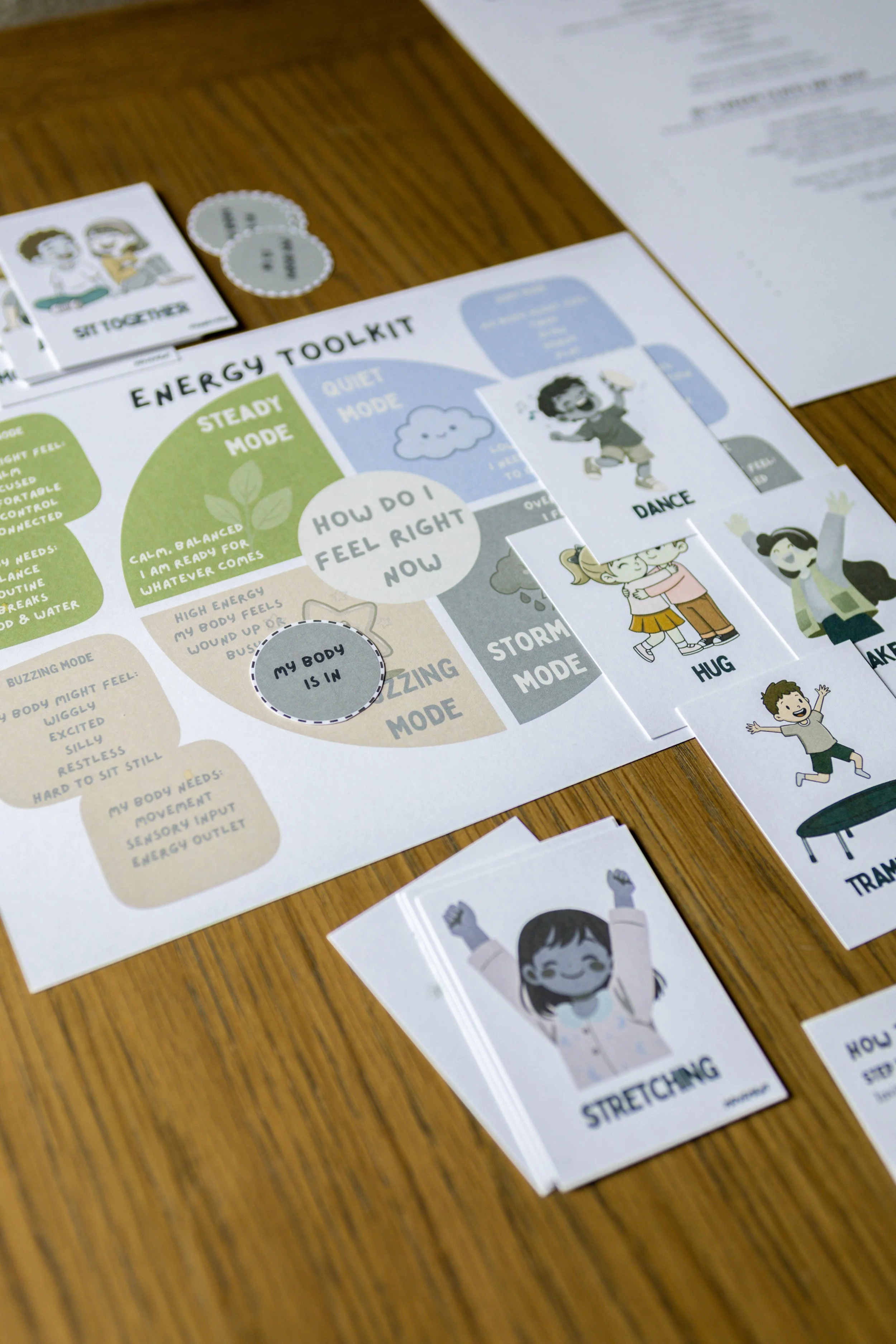
A calm, reusable toolkit designed to help children recognise their energy states, explore body signals, and choose supportive regulation tools in a safe and gentle way.
Created with a neuroaffirming approach, the ThinkaLearn Energy Toolkit helps children build emotional awareness through interactive check-ins, regulation supports, and child-led strategy choices — without shame, behaviour charts, or “good vs bad” emotions.
Designed for home, school, therapy spaces, calm corners, and emotional check-ins.
WHAT’S INCLUDED
Printable Energy Wheel
A reusable emotional check-in wheel helping children identify their current energy state.
Companion Support Cards
Four categories of support tools:
Rest & Reset
Move & Reset
My Sensory Toolkit
Connect & Feel Safe
Instruction & Guidance Sheets
Clear, neuroaffirming guidance for parents, teachers, therapists, and support staff.
Interactive Regulation System
Designed for:
laminating
velcro
dry-wipe use
calm corners
home routines
classroom support
Body Awareness & Emotional Recognition
Helps children begin developing:
interoception
emotional vocabulary
nervous system awareness
self-advocacy skills
This resource is licensed to a single purchaser only. Parents may use the resource within their own household. Teachers may use the resource within a single classroom. Professionals may use the resource within their own practice. Redistribution, resale, sharing, uploading, or rebranding of ThinkaLearn resources is not permitted.
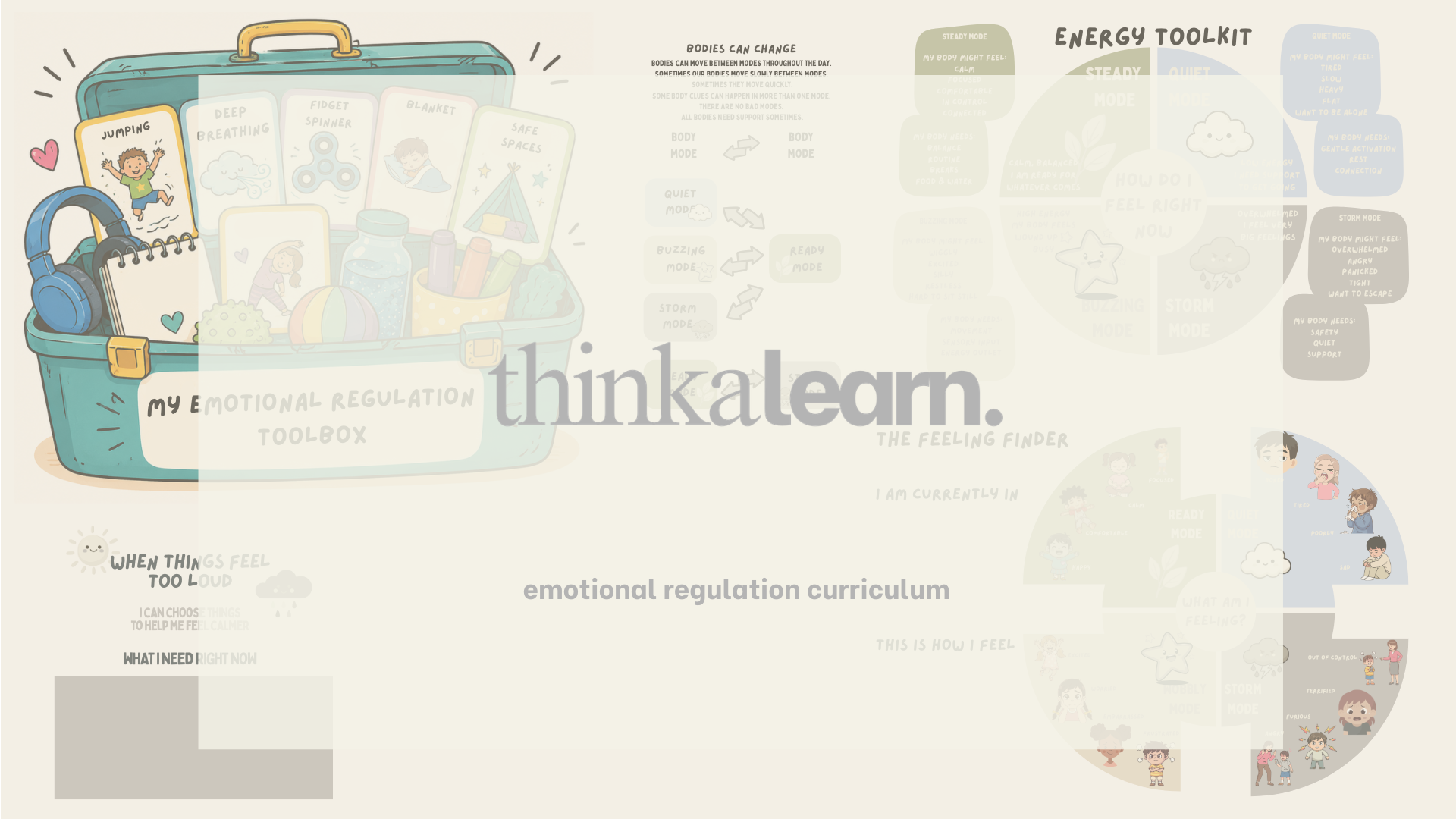
A child-friendly emotional regulation curriculum designed to help children understand their body, emotions, sensory needs, and regulation in a safe, visual, and supportive way.
The ThinkaLearn Regulation Series is a connected set of printable emotional regulation resources created to support children through a step-by-step journey of body awareness, emotional understanding, sensory support, and personalised regulation strategies.
Rather than focusing on behaviour management, the series helps children gradually build awareness of:
overwhelm
body clues
emotional states
sensory needs
regulation tools
supportive strategies
The curriculum follows a simple developmental pathway that helps children move from recognising difficult feelings toward building their own personalised regulation toolkit.
THE FIVE STAGES OF THE THINKALEARN REGULATION SERIES
STAGE 1 — WHEN THINGS FEEL TOO LOUD
Children begin recognising overwhelm, sensory overload, and emotional escalation while exploring calming and safety supports.
STAGE 2 — ENERGY TOOLKIT
Children explore different body and energy states including Ready Mode, Quiet Mode, Buzzing Mode, and Storm Mode.
STAGE 3 — MY BODY FEELS
Children begin recognising physiological body clues and physical sensations connected to regulation states.
STAGE 4 — EMOTIONAL REGULATION TOOLKIT
Children explore different categories of support including calm tools, sensory tools, movement tools, comfort tools, focus tools, and connection tools.
STAGE 5 — MY EMOTIONAL REGULATION TOOLBOX
Children build their own personalised regulation toolkit by identifying tools and strategies that support their individual needs.
DESIGNED FOR CHILDREN WHO MAY EXPERIENCE:
emotional overwhelm
sensory overload
anxiety
autism
ADHD
emotional dysregulation
shutdowns and meltdowns
difficulty recognising emotions
body awareness difficulties
sensory seeking or avoidance
executive functioning challenges
IDEAL FOR:
parents
schools
teachers
nurture rooms
ELSA interventions
therapy settings
autism support
ADHD support
SEND and ALN interventions
emotional wellbeing work
calm corners and regulation spaces
A NEUROAFFIRMING APPROACH
The ThinkaLearn Regulation Series is designed to feel supportive, non-shaming, and child-friendly.
Children are not taught that emotions or body states are “bad.” Instead, the curriculum helps children understand that:
bodies give clues
feelings can change
all children need support sometimes
different tools help different bodies
The visual and accessible format helps children explore emotional regulation in a calm, structured, and supportive way both at home and in educational settings.
The resources can be used individually or together as part of a complete emotional regulation curriculum.
Different bodies need different supports.
This resource is licensed to a single purchaser only. Parents may use the resource within their own household. Teachers may use the resource within a single classroom. Professionals may use the resource within their own practice. Redistribution, resale, sharing, uploading, or rebranding of ThinkaLearn resources is not permitted.
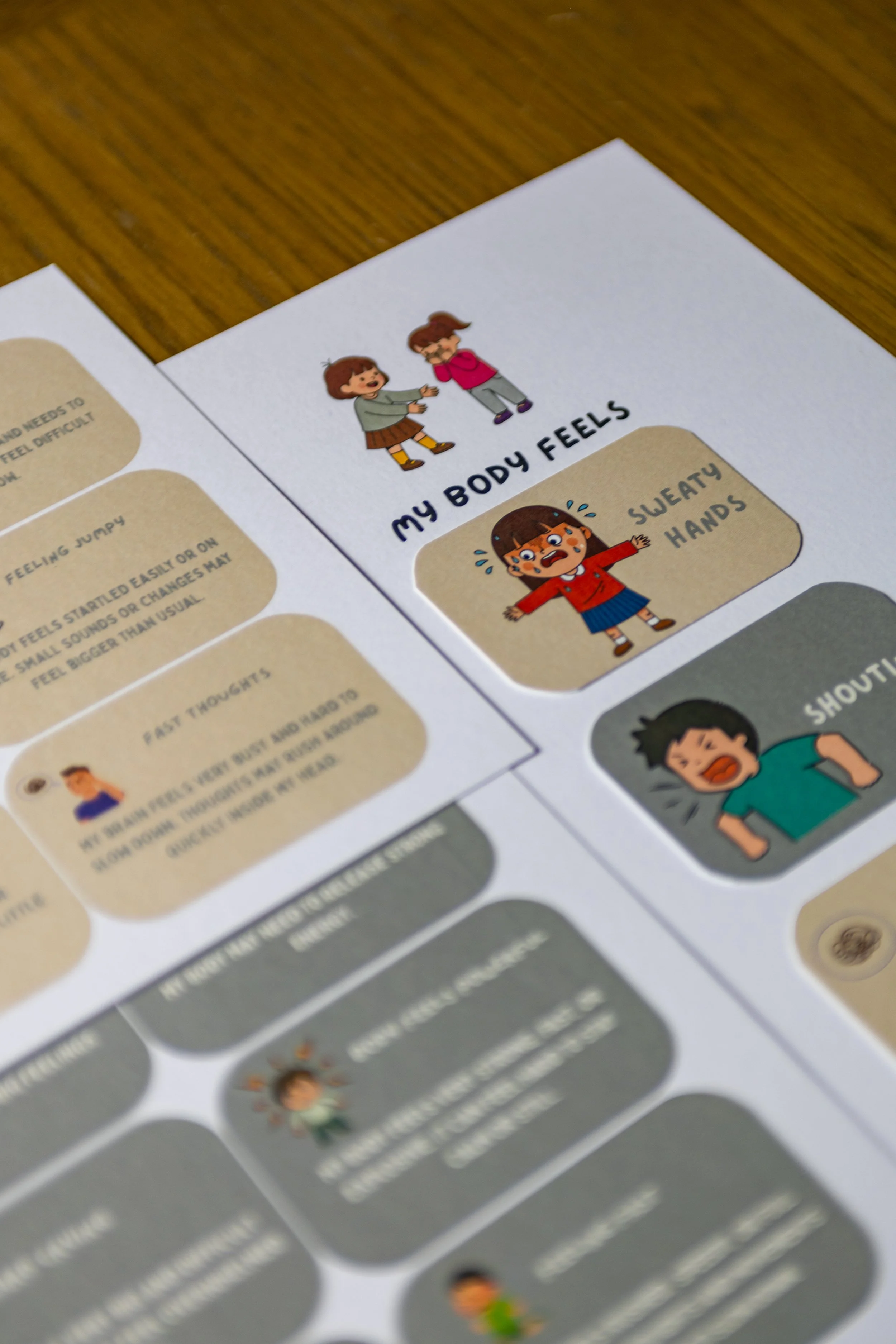
“My Body Feels” is a child-friendly emotional regulation and body awareness resource designed to help children recognise the physical clues their body gives throughout the day.
Many children experience emotions physically before they are able to identify or explain them. This resource helps children begin noticing those body sensations in a simple, visual, and supportive way.
Children explore body clues connected to different regulation states including:
tight chest
wiggly body
feeling fast
hard to focus
heavy body
relaxed muscles
cold hands
tummy flutters
steady breathing
empty tummy feelings
The resource introduces four simple body modes:
Ready Mode
Quiet Mode
Buzzing Mode
Storm Mode
Children learn that bodies can move between different modes throughout the day, and that there are no “bad” body states.
This resource is designed to support:
emotional regulation
interoception
body awareness
sensory understanding
co-regulation
autism support
ADHD support
anxiety support
SEND and ALN interventions
emotional literacy
school and home support
The visual format helps make difficult concepts feel accessible and non-threatening for younger children and neurodivergent learners.
This resource works especially well alongside:
emotional regulation activities
sensory support tools
calm corner resources
Zones-style regulation work
autism and ADHD interventions
SEND classroom support
Included in this resource:
body clue visuals
body mode pages
emotional regulation prompts
matching activities
discussion prompts
information sheets for adults
printable cut-out cards
Perfect for:
parents
schools
teachers
ALN/SEND support
ELSA interventions
autism support
ADHD support
therapy settings
nurture rooms
emotional wellbeing work
Different bodies give different clues.
This resource helps children begin understanding what their body may be trying to say.
This resource is licensed to a single purchaser only. Parents may use the resource within their own household. Teachers may use the resource within a single classroom. Professionals may use the resource within their own practice. Redistribution, resale, sharing, uploading, or rebranding of ThinkaLearn resources is not permitted.