

The Emotional Regulation Curriculum
A complete visual pathway helping children understand feelings, body clues and regulation strategies.
Emotional regulation is often treated as a behaviour problem.
Children are given coping strategies, reward systems and calming activities whilst the foundations are overlooked.
Before children can regulate emotions, they first need to understand them.
The Emotional Regulation Curriculum has been designed to help children gradually build emotional awareness, emotional vocabulary, body awareness and regulation skills through five connected stages of learning.
Each stage builds upon the previous one, creating a structured pathway from recognising overwhelm to understanding emotions and eventually developing independent regulation strategies.
why emotional regulation support often feels incomplete
emotional regulation is not a single skill
Children are often described as struggling with emotional regulation.
Parents may hear that a child needs to learn calming strategies, develop coping skills or improve emotional control. Whilst these approaches can be helpful, they often overlook something important.
Emotional regulation is not a single skill.
It is a collection of many smaller skills developing together over time.
Before children can successfully use regulation strategies, they first need opportunities to understand what they are experiencing. They need to recognise when something feels uncomfortable, identify emotional changes, notice body clues, understand what those experiences may mean and communicate when support is needed.
For many children, these foundational skills are still developing.
When a child becomes overwhelmed, frustrated, anxious or emotionally distressed, the difficulty is not always a lack of regulation. Sometimes the challenge begins much earlier in the process. A child may not yet understand what they are feeling, why they are feeling it or what their body is trying to communicate.
The Emotional Regulation Curriculum has been designed to support these foundations first.
Rather than focusing solely on behaviour or coping strategies, the curriculum helps children gradually develop awareness, understanding and confidence through a structured sequence of learning experiences. Each stage builds upon the previous one, creating a pathway that supports emotional development from the ground up.
body awareness supports emotional understanding
Emotions are not experienced only in the mind.
Many emotional experiences first appear through physical sensations within the body.
A worried child may notice tummy flutters. A frustrated child may feel tension in their muscles. An overwhelmed child may experience a racing heart, restlessness or difficulty concentrating.
Children often notice these body clues before they recognise the emotions connected to them.
Learning to recognise physical sensations can therefore provide valuable insight into emotional experiences. By helping children understand the connection between body clues and emotions, they begin developing a deeper awareness of themselves and the early signs that support may be needed.
This understanding becomes an important part of emotional regulation development.
feelings need language before they can be managed
Emotions can be difficult to communicate without the language needed to describe them.
Many children are familiar with basic emotions such as happy, sad or angry, but struggle when experiences become more complex. Feelings such as disappointment, frustration, embarrassment, overwhelm, nervousness or loneliness can be much harder to identify and explain.
When children do not have the vocabulary to describe emotional experiences, communication often becomes more difficult. This can lead to misunderstandings, frustration and increased emotional distress.
The curriculum helps children gradually expand their emotional vocabulary and build confidence recognising a wider range of feelings. As emotional language develops, children often become better able to explain experiences, communicate needs and participate in supportive conversations.
emotional awareness comes before regulation
Children cannot regulate emotions they do not yet recognise.
Before a child can choose a strategy, ask for support or explain what is wrong, they first need to recognise that something is happening internally.
Many children know they feel uncomfortable long before they understand why. They may become tearful, frustrated, withdrawn or overwhelmed without being able to identify the emotions underneath those experiences.
Developing emotional awareness helps children begin recognising emotional changes earlier. Over time, they learn that feelings provide information and that emotions can be explored, understood and communicated rather than simply reacted to.
Emotional awareness forms the foundation upon which emotional regulation is built.
regulation strategies work best when children understand why they need them
Many emotional regulation resources begin with strategies.
Children may be encouraged to take deep breaths, use calming tools, move their bodies or access sensory supports. Whilst these approaches can be valuable, they are often most effective when children understand what those strategies are helping with.
A child who recognises that they feel overwhelmed is more likely to understand why a regulation strategy may help. A child who understands they are becoming frustrated can begin exploring which supports feel useful during those moments.
The curriculum helps children build this understanding gradually.
Rather than jumping straight to solutions, children are first supported in recognising emotions, understanding body clues and developing emotional awareness. As these foundations strengthen, regulation strategies become more meaningful, purposeful and effective.
The goal is not simply teaching children what to do when emotions become difficult.
The goal is helping children understand themselves well enough to know why support may be needed in the first place.
Children Cannot Regulate What They Do Not Yet Understand.

The Five Stages Of Emotional Understanding
The Emotional Regulation Curriculum has been designed as a connected learning journey.
Rather than introducing isolated activities or disconnected strategies, each stage builds upon the understanding developed in the previous stage. Children gradually move from recognising experiences to understanding emotions, identifying body clues and eventually exploring regulation strategies with greater confidence.
Each resource can be used independently, but together they create a structured pathway towards emotional awareness and self-understanding.
Stage 1
Recognising Overwhelm
Children begin learning about sensory overwhelm, environmental demands and situations that may feel "too much".
This stage helps children understand that overwhelm is something they experience, not something they choose.
Learn More Here
Stage 2
Understanding Emotional States
Children are introduced to four simple emotional modes that help them recognise how feelings can change throughout the day.
This stage creates a foundation for discussing emotions in a visual and accessible way.
Learn More Here
Stage 3
Listening To Body Clues
Children explore the physical sensations connected to emotions, stress and regulation.
By learning to recognise body clues, children begin developing greater awareness of how emotions can be experienced physically.
Learn More Here
Stage 4
Building Emotional Vocabulary
Children learn to identify, sort and communicate a wider range of feelings.
This stage helps children move beyond simply knowing they feel uncomfortable and begin recognising specific emotional experiences.
Learn More Here
Stage 5
Building Regulation Skills
Children begin exploring practical strategies that may help different emotional experiences, body clues and regulation needs.
By this stage, children have already developed awareness of overwhelm, emotional states, body clues and feelings. The final stage helps them bring these skills together by exploring supportive tools, regulation strategies and self-awareness techniques that can be used across home, school and everyday life.
Rather than focusing on a single solution, children learn that different situations may require different forms of support.
Included within the curriculum:
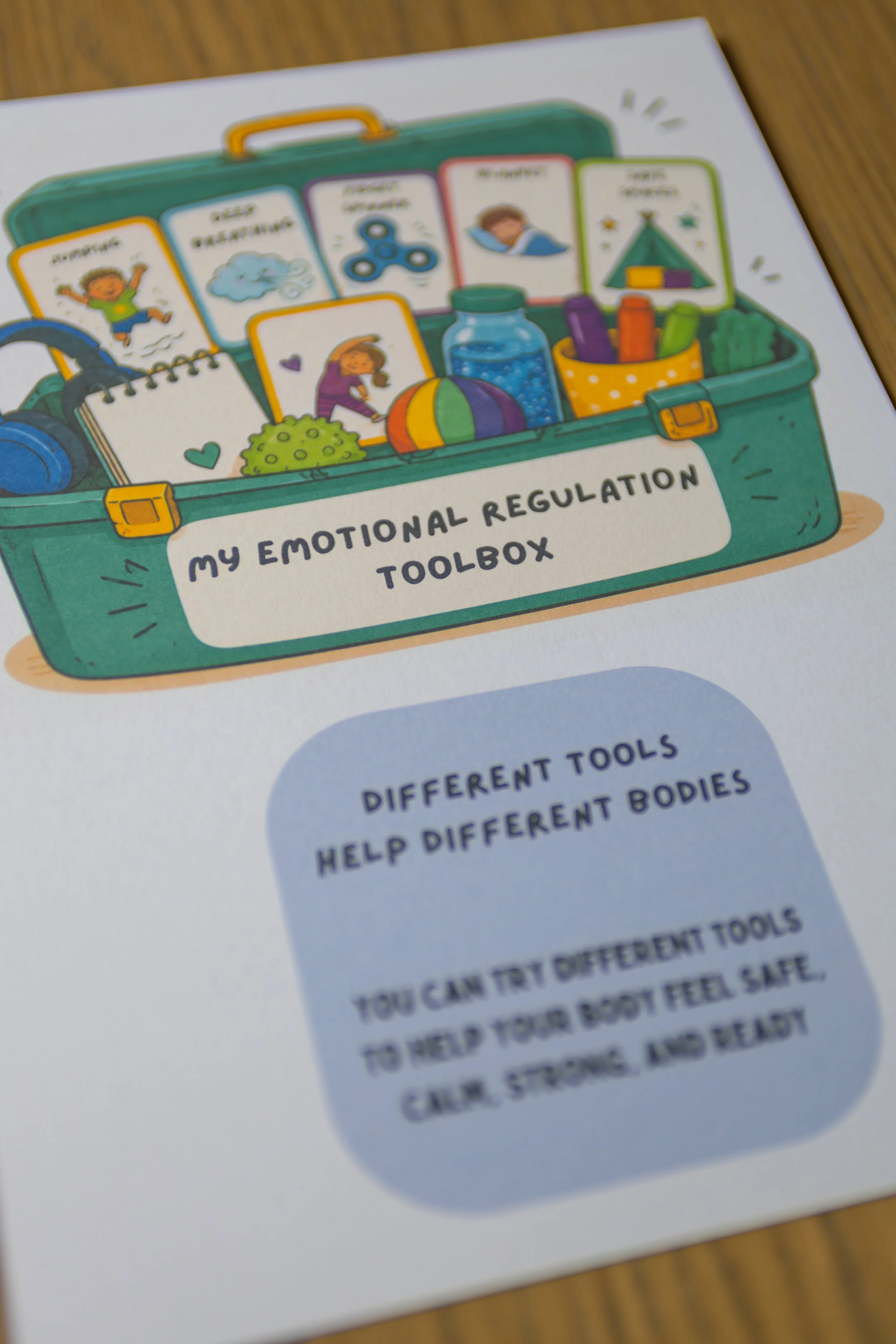
My Emotional Toolbox
There are no bad feelings. Only feelings that need understanding.
how the curriculum builds emotional regulation differently
Many emotional regulation resources focus on behaviour.
Children are taught calming techniques, coping strategies or regulation activities without first developing a deeper understanding of what they are experiencing.
Whilst these approaches can be helpful, they often assume children already understand their emotions, body signals and support needs.
The Emotional Regulation Curriculum takes a different approach.
Rather than beginning with regulation strategies, the curriculum begins with awareness.
Children first learn to recognise overwhelm, understand emotional states, identify body clues and build emotional vocabulary. Regulation strategies are introduced only after these foundations have been established.
This creates a more connected understanding of emotional experiences and helps children make sense of why different supports may be helpful at different times.
The aim is not simply to teach children what to do when emotions feel difficult.
The aim is to help children understand themselves.
supporting home, school & SEND environments
The curriculum has been designed for flexible use across a wide range of settings.
Resources can be used:
at home
in classrooms
within SEND provision
during nurture interventions
in therapy sessions
through emotional wellbeing support
This flexibility allows children to encounter consistent emotional language and concepts across multiple environments, supporting deeper learning and understanding over time.
understanding before strategy
Children are often given strategies before they understand why those strategies exist.
The curriculum helps children recognise emotions, body clues and emotional patterns before introducing regulation tools. This creates stronger understanding and greater confidence when selecting support strategies later.
visual learning throughout
Every stage uses visual supports designed to reduce pressure and make emotional learning more accessible.
Many children find emotions easier to explore when they can see, sort, match and discuss experiences rather than relying entirely on verbal explanations.
The visual structure provides consistency across the entire curriculum and helps children build familiarity as they progress through each stage.
designed to grow with the child
Emotional awareness develops gradually.
Children may revisit different stages many times as their understanding grows. The curriculum has been designed to support this natural progression, allowing children to strengthen existing skills whilst continuing to develop new ones.
There is no expectation that children move through the curriculum perfectly or in a straight line.
The focus is always on understanding, exploration and confidence-building.
The Goal Is Not Perfect Behaviour. The Goal Is Understanding.
who is the “Emotional Regulation Curriculum” for?
Every child develops emotional awareness differently.
Some children naturally begin recognising feelings and communicating emotions through everyday experiences. Others may need additional support understanding what they are feeling, recognising body clues or identifying what may help when emotions become difficult.
The Emotional Regulation Curriculum has been designed to support children who benefit from a more structured and visual approach to emotional learning.
By combining emotional awareness, body awareness, emotional vocabulary and regulation skills within a single pathway, the curriculum provides opportunities for children to build understanding gradually and with confidence.
ADHD learners
Children with ADHD often experience emotions intensely and may find it difficult to recognise emotional changes before feelings become overwhelming.
The curriculum helps children develop awareness of emotional states, body clues and support needs whilst building confidence discussing emotional experiences.
children who struggle to identify feelings
Some children regularly respond with:
"I don't know."
Not because they are unwilling to communicate, but because they genuinely struggle to recognise and describe emotional experiences.
The curriculum provides multiple pathways into emotional understanding through visuals, body awareness, emotional vocabulary and supportive discussion.
home, school & professional support
The Emotional Regulation Curriculum has been designed for flexible use across a wide range of environments.
It may be used by:
parents and carers
teachers
teaching assistants
ALNCOs
therapists
nurture practitioners
emotional wellbeing professionals
SEND support staff
The consistent structure helps children encounter the same emotional concepts across different environments, strengthening understanding and confidence over time.
autistic children
Many autistic children experience emotions deeply but may find emotional identification, communication and self-understanding challenging.
The visual structure of the curriculum helps break complex emotional concepts into smaller, more accessible learning experiences that can be explored at a comfortable pace.
children experiencing anxiety
Anxiety can often feel difficult to explain.
Many children know something feels uncomfortable without fully understanding why. The curriculum provides language, visual supports and structured conversations that help children explore worries, uncertainty and emotional experiences more confidently.
children with sensory processing differences
Sensory experiences can have a significant impact on emotional wellbeing.
The curriculum acknowledges the relationship between sensory overwhelm, emotional experiences and regulation, helping children recognise how environments and sensory input can influence how they feel.
Every Child Deserves The Opportunity To Understand Themselves
Emotional Regulation Curriculum

A Complete Emotional Awareness & Regulation Programme For Children
Understanding emotions can feel overwhelming for many children.
Some children struggle to recognise feelings. Others find it difficult to understand body clues, communicate emotions or identify what support may help when emotions become big. Whilst emotional regulation is often discussed as a single skill, it is actually built from many smaller foundations developing together over time.
The Emotional Regulation Curriculum has been designed to support those foundations.
Through five connected stages of learning, children gradually develop awareness of overwhelm, emotional states, body clues, emotional vocabulary and regulation strategies. Each stage builds upon the last, creating a structured pathway that helps children understand themselves with greater confidence.
Rather than teaching isolated coping strategies, the curriculum focuses on helping children make sense of their experiences first. As understanding develops, emotional regulation becomes more meaningful, accessible and sustainable.
Designed for home, school, therapy and SEND environments, the curriculum provides a visual and child-friendly approach to emotional learning that can be revisited time and time again.

what children will learn
Understanding Emotional Experiences
01
Children learn that emotions are not simply "good" or "bad". Through visual activities and guided exploration, they begin recognising emotional states, understanding how feelings can change throughout the day and developing greater awareness of their own experiences.
Recognising Body Clues & Early Warning Signs
02
Children explore how emotions are often felt physically within the body. They learn to notice body clues connected to stress, overwhelm, anxiety, calmness and regulation, helping them recognise emotional experiences earlier and with greater confidence.
Building Emotional Vocabulary
03
Children develop the language needed to identify, describe and communicate a wider range of feelings. By expanding emotional vocabulary, they become better equipped to explain experiences, express needs and engage in supportive conversations with trusted adults.
Communicating Needs & Seeking Support
04
Children learn that emotions provide important information and that asking for support is a valuable skill. The curriculum encourages self-awareness, emotional communication and confidence discussing what may help during different emotional experiences.
Developing Lifelong Regulation Skills
05
By bringing together emotional awareness, body awareness, emotional vocabulary and practical support strategies, children begin building the foundations for emotional regulation, resilience and greater independence over time.
Understanding feelings is easier when children feel understood first.
What Is Included In The Emotional Regulation Curriculum?
The Emotional Regulation Curriculum combines five connected stages of learning designed to help children develop emotional awareness, body awareness, emotional vocabulary and regulation skills over time.
Each stage introduces new concepts whilst reinforcing previous learning, creating a structured pathway that supports children in understanding themselves with greater confidence.
Together, the curriculum provides a complete framework for exploring emotions, recognising body clues, understanding emotional experiences and developing practical regulation skills.
The curriculum is built around the belief that emotional regulation develops through understanding rather than compliance.
Instead of asking children to manage emotions they do not yet understand, the curriculum provides a structured sequence of learning experiences that help children make sense of what is happening internally.
By gradually connecting emotions, body sensations, behaviour and support needs, children are given opportunities to develop self-awareness, emotional confidence and a stronger understanding of their own experiences.
Over time, these foundations can support more effective emotional communication, self-advocacy and regulation skills.
Included Throughout The Curriculum
Alongside the five curriculum stages, children and adults will have access to:
Visual emotional learning resources
Emotional check-in activities
Body awareness supports
Feeling identification activities
Regulation strategy materials
Parent and professional guidance
Classroom and home-use resources
Flexible activities suitable for SEND and ALN environments
The curriculum has been designed to work across home, school and professional settings, allowing children to encounter consistent emotional language and concepts wherever they learn and grow.
Stage 1 — When Things Feel Too Loud
The curriculum begins by helping children recognise sensory overwhelm and understand that feelings of overload are something they experience, not something they choose.
Children explore situations that may feel overwhelming, begin recognising early signs of overload and learn that support can be helpful when experiences feel too big.
Focus Areas
Sensory awareness
Recognising overwhelm
Emotional safety
Supportive conversations
Understanding environmental triggers
Stage 2 — Understanding Emotion Modes
Children are introduced to four simple emotional modes that provide a visual framework for discussing feelings and emotional experiences.
These modes become a consistent reference point throughout the rest of the curriculum and help children understand that emotions can change throughout the day.
Focus Areas
Emotional states
Emotional awareness
Recognising patterns
Understanding emotional changes
Building emotional confidence
Stage 3 — Listening To Body Clues
Children begin exploring how emotions are often experienced physically within the body.
Through visual supports and guided activities, children learn to recognise body clues connected to different emotional states and develop greater awareness of their own experiences.
Focus Areas
Body awareness
Interoception
Physical sensations
Emotional body clues
Early recognition of emotional changes
Stage 4 — Building Emotional Vocabulary
Children develop the language needed to identify, sort and communicate a wider range of feelings.
By exploring emotions within each emotional mode, children begin recognising more specific emotional experiences and building confidence discussing them with trusted adults.
Focus Areas
Emotional identification
Emotional literacy
Emotional communication
Feeling recognition
Understanding emotional experiences
Stage 5 — Building Regulation Skills
The final stage brings together everything children have learned throughout the curriculum.
Children explore practical regulation tools, support strategies and self-awareness activities that help them consider what may be helpful during different emotional experiences.
This stage includes the exclusive My Emotional Toolbox resource and is available only as part of the complete curriculum.
Focus Areas
Regulation strategies
Self-awareness
Support selection
Emotional problem-solving
Developing independence
Understanding Yourself Is A Skill That Can Be Learned.
The Emotional Regulation Curriculum
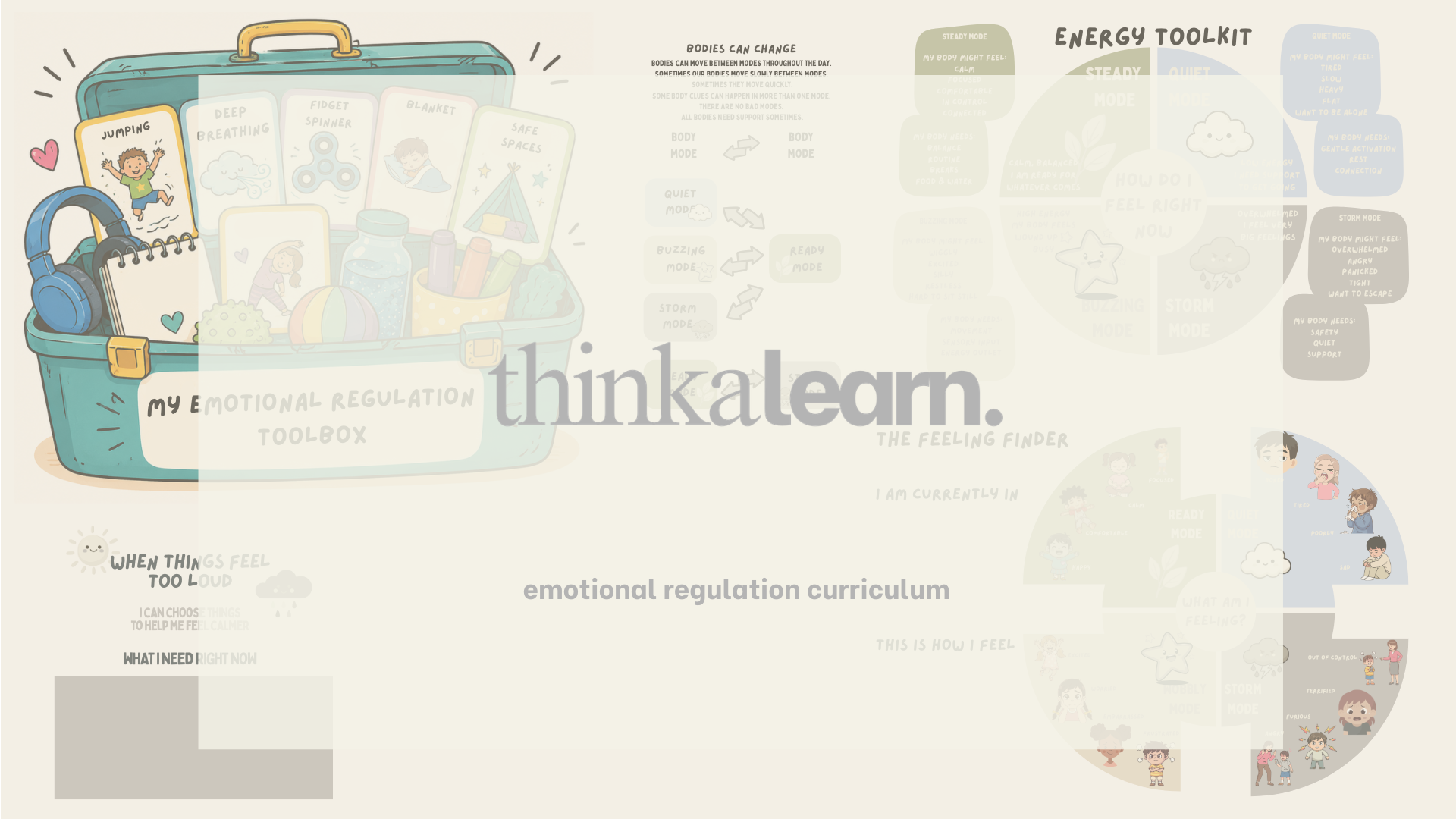
A child-friendly emotional regulation curriculum designed to help children understand their body, emotions, sensory needs, and regulation in a safe, visual, and supportive way.
The ThinkaLearn Regulation Series is a connected set of printable emotional regulation resources created to support children through a step-by-step journey of body awareness, emotional understanding, sensory support, and personalised regulation strategies.
Rather than focusing on behaviour management, the series helps children gradually build awareness of:
overwhelm
body clues
emotional states
sensory needs
regulation tools
supportive strategies
The curriculum follows a simple developmental pathway that helps children move from recognising difficult feelings toward building their own personalised regulation toolkit.
THE FIVE STAGES OF THE THINKALEARN REGULATION SERIES
STAGE 1 — WHEN THINGS FEEL TOO LOUD
Children begin recognising overwhelm, sensory overload, and emotional escalation while exploring calming and safety supports.
STAGE 2 — ENERGY TOOLKIT
Children explore different body and energy states including Ready Mode, Quiet Mode, Buzzing Mode, and Storm Mode.
STAGE 3 — MY BODY FEELS
Children begin recognising physiological body clues and physical sensations connected to regulation states.
STAGE 4 — EMOTIONAL REGULATION TOOLKIT
Children explore different categories of support including calm tools, sensory tools, movement tools, comfort tools, focus tools, and connection tools.
STAGE 5 — MY EMOTIONAL REGULATION TOOLBOX
Children build their own personalised regulation toolkit by identifying tools and strategies that support their individual needs.
DESIGNED FOR CHILDREN WHO MAY EXPERIENCE:
emotional overwhelm
sensory overload
anxiety
autism
ADHD
emotional dysregulation
shutdowns and meltdowns
difficulty recognising emotions
body awareness difficulties
sensory seeking or avoidance
executive functioning challenges
IDEAL FOR:
parents
schools
teachers
nurture rooms
ELSA interventions
therapy settings
autism support
ADHD support
SEND and ALN interventions
emotional wellbeing work
calm corners and regulation spaces
A NEUROAFFIRMING APPROACH
The ThinkaLearn Regulation Series is designed to feel supportive, non-shaming, and child-friendly.
Children are not taught that emotions or body states are “bad.” Instead, the curriculum helps children understand that:
bodies give clues
feelings can change
all children need support sometimes
different tools help different bodies
The visual and accessible format helps children explore emotional regulation in a calm, structured, and supportive way both at home and in educational settings.
The resources can be used individually or together as part of a complete emotional regulation curriculum.
Different bodies need different supports.
This resource is licensed to a single purchaser only. Parents may use the resource within their own household. Teachers may use the resource within a single classroom. Professionals may use the resource within their own practice. Redistribution, resale, sharing, uploading, or rebranding of ThinkaLearn resources is not permitted.
questions we’re asked
-
The curriculum has been designed as a structured learning pathway, with each stage building upon concepts introduced earlier in the programme. Whilst individual resources can be used independently, completing the stages in order provides the strongest foundation for emotional awareness, emotional understanding and regulation skills.
-
Yes.
The curriculum was designed with visual learning, emotional awareness and SEND support in mind. Many autistic children benefit from structured approaches that break emotional concepts into smaller, more accessible learning experiences.
The visual framework used throughout the curriculum helps support emotional identification, body awareness and communication in a way that feels consistent and predictable.
-
Absolutely.
Many children with ADHD experience emotions intensely and may find emotional changes difficult to recognise before they become overwhelming. The curriculum helps children build awareness of emotional states, body clues and support needs whilst developing emotional vocabulary and regulation skills.
-
Yes.
The curriculum helps children recognise feelings, understand body clues and build emotional language around experiences that may otherwise feel confusing or difficult to explain.
Many of the activities encourage supportive conversations and emotional exploration without placing pressure on children to immediately find the "right" answer.
-
The curriculum is most suitable for primary-aged children, although many of the resources can be adapted for younger children, older learners and children with additional learning needs.
As the curriculum focuses on emotional awareness rather than academic content, activities can be adapted to suit individual developmental levels and communication styles.
-
Yes.
The final stage of the curriculum includes My Emotional Toolbox, which helps children explore practical regulation strategies and support options.
This resource is included as part of the Emotional Regulation Curriculum and is not available separately.